


Genomia s.r.o.
Republikánská 6
312 00 Pilsen
e-mail: laborator@genomia.cz
» Contact & location


Birds Green/Blue Eggshell Coloration in Chickens
Green/Blue Eggshell Coloration in Chickens
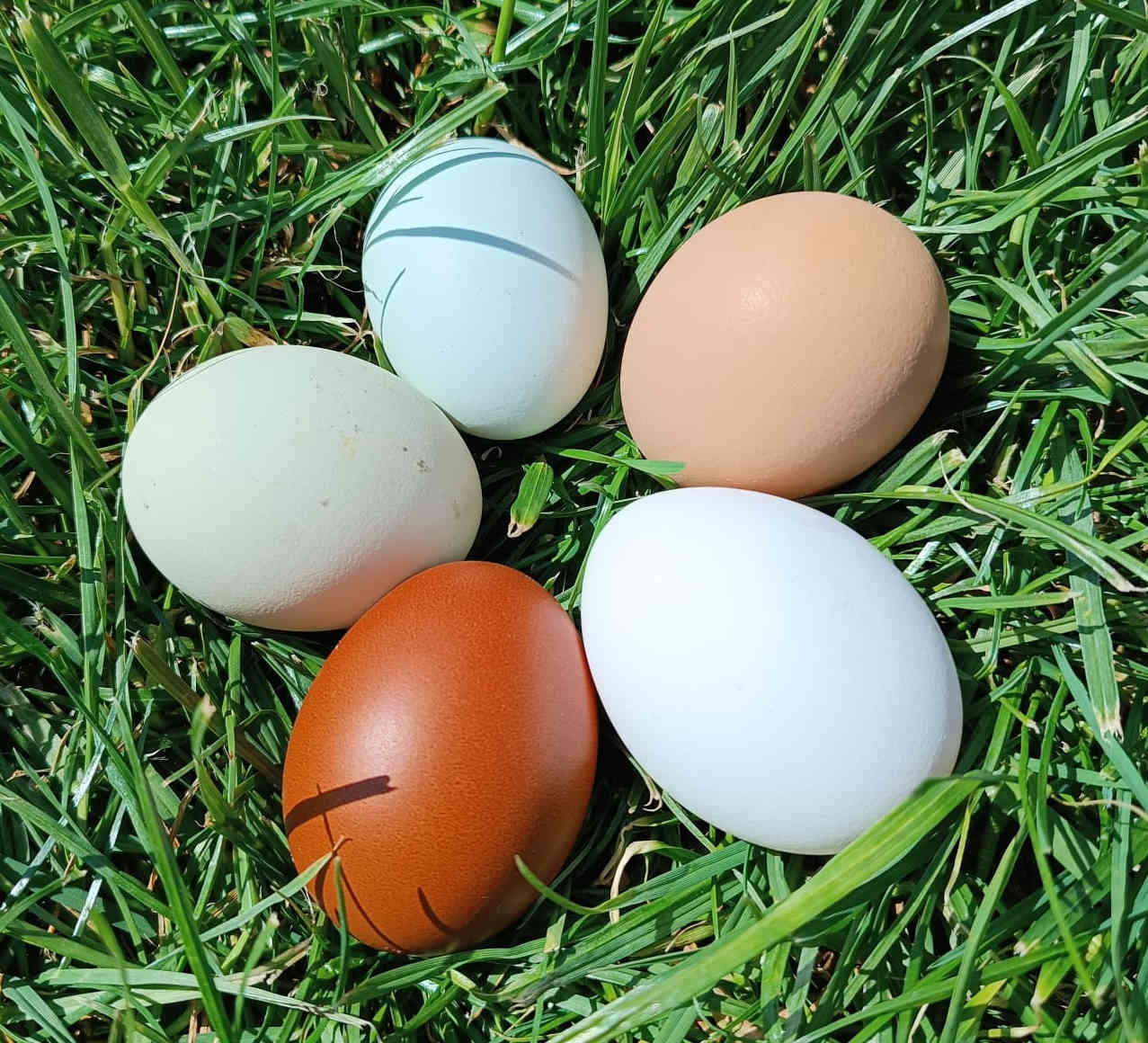
Eggshell coloration in chickens results from the deposition of pigments during egg formation in the oviduct. Green/blue coloration is primarily caused by the pigment biliverdin, which is produced during the breakdown of heme. Unlike the brown pigment (protoporphyrin), which is deposited only on the surface of the shell, biliverdin is present throughout the entire thickness of the shell. Therefore, green/blue eggs are colored not only on the surface but also within the shell.
.
.
At the molecular level, the green/blue coloration is caused by the insertion of a retroviral element (EAV-HP) into the regulatory region of the SLCO1B3 gene. This mutation causes the gene to be actively expressed in the shell gland, allowing biliverdin to be deposited into the forming eggshell. The green coloration of the shell, often referred to as “olive,” is not produced by a single gene, but by a combination of the green/blue pigment biliverdin and the brown pigment protoporphyrin. If a hen carries the O allele and also has a genetic predisposition to deposit brown pigment, the resulting eggshell color is green. The specific shade may vary depending on the amount of individual pigments—from light green to dark olive.
Interestingly, a similar phenotype may have arisen through different mechanisms regulating the SLCO1B3 gene, suggesting that the green/blue egg color may have evolved independently in different chicken lines. One of the original breeds laying green/blue eggs is considered to be the Araucana breed, originating from Chile. This breed has long been associated with lower cholesterol content in eggs. However, this claim arose more as a marketing myth and is not supported by scientific evidence; it has already been experimentally disproven in the past. Eggshell color is related only to pigments deposited in the shell, not to the composition of the yolk.
Genetic testing can help determine the presence of the SLCO1B3 gene variant and thus facilitate targeted breeding of hens laying eggs of the desired color. Genetic testing is best performed using plucked feathers.