


Genomia s.r.o.
Republikánská 6
312 00 Pilsen
e-mail: laborator@genomia.cz
» Contact & location


Locus E guinea pigs
Related tests
E locus in guinea pigs
The E locus (Extension) is one of the key genetic loci influencing coat coloration in guinea pigs. The expression of the E locus is determined by the MC1R gene, which encodes the melanocortin 1 receptor (MC1R). This receptor plays a crucial role in regulating the production of two main types of pigment in melanocytes—eumelanin (black or brown pigment) and pheomelanin (red to yellow pigment). Higher activity of the MC1R receptor promotes the production of dark eumelanin, while lower activity leads to the production of lighter pheomelanin.
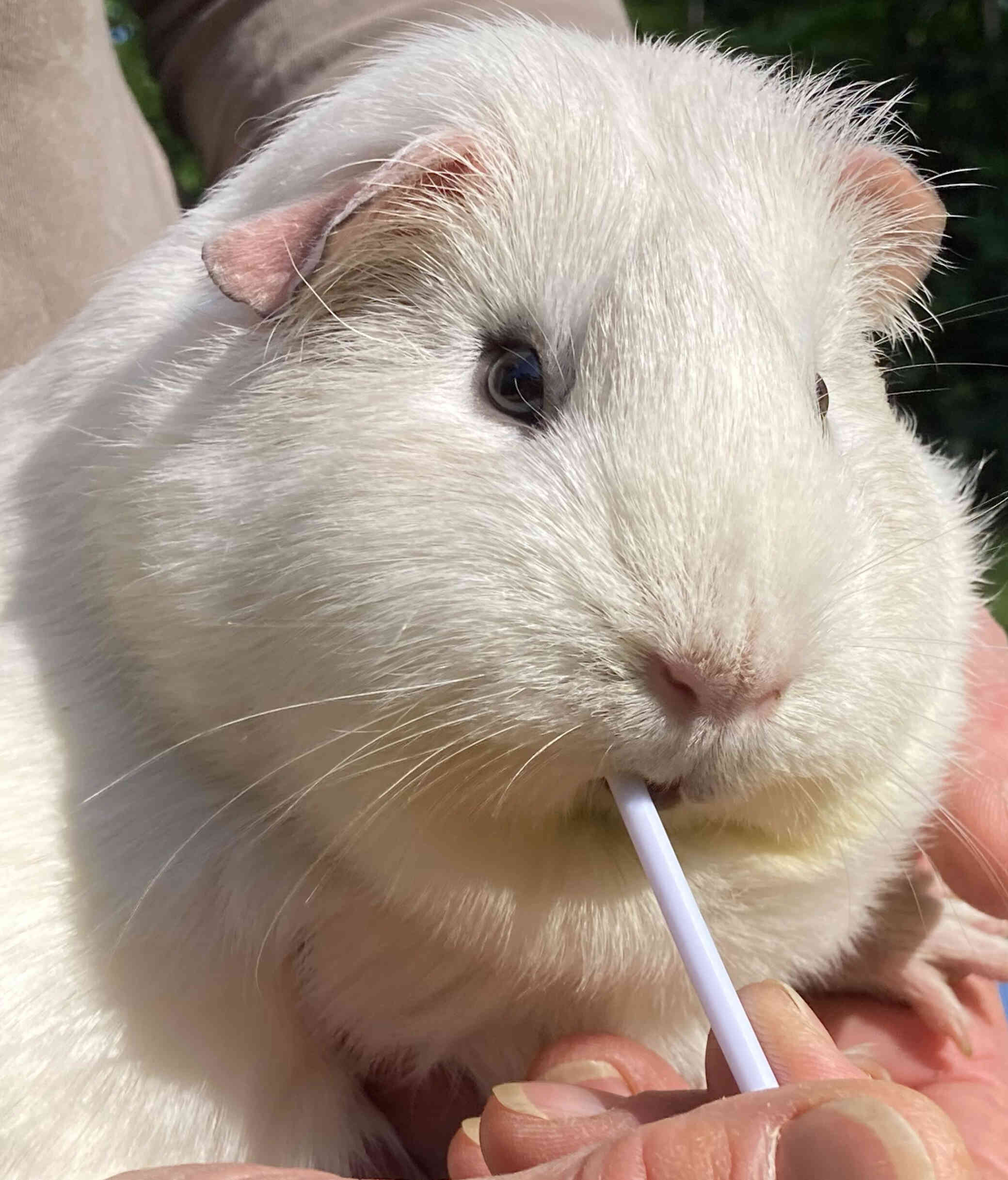
At the E locus in guinea pigs, several alleles occur, forming an allelic series with a certain dominance hierarchy. The presence of a more dominant allele can suppress the expression of a more recessive allele. This hierarchy is important when interpreting genetic tests and planning breeding. For breeding practice, the most relevant alleles are E, ep, and recessive alleles of the e type (e.g., e2 and e4), with their dominance relationship expressed as follows:
E > ep > e
The E allele is the most dominant. It represents the original wild-type allele (without mutation). The presence of at least one E allele allows the production of dark pigment (eumelanin).
Another important variant is the ep allele, which is often associated with the typical tricolor coat pattern. Individuals with the ep/ep genotype may show alternating production of eumelanin and pheomelanin in different parts of the coat, which phenotypically appears as a combination of dark and red areas. If a spotting gene (e.g., the S locus) is also present, the typical black–red–white tricolor pattern develops, commonly referred to by breeders as tricolor.
In contrast, the e2 and e4 alleles are recessive variants of this locus. If a guinea pig is homozygous for either of these alleles (e2/e2 or e4/e4), the function of the MC1R receptor is significantly reduced. As a result, dark eumelanin is not produced and the coat contains only lighter pheomelanin. Phenotypically, this results in red to yellow coat coloration. These variants are caused by the c.749T>C mutation in the MC1R gene (in the case of the e2 allele) or by a large deletion removing a significant portion of the coding sequence of the same gene (“a deletion of 2760 bp, including the entire MC1R coding region” — in the case of the e4 allele).
Both mutations are inherited in an autosomal recessive manner. This means they are expressed only in individuals that inherit the mutated gene from both parents. Carriers (heterozygotes) have one functional allele that allows the production of dark pigment and can pass the mutation to their offspring. Recessive homozygotes do not produce dark pigment and have light coloration. When two heterozygous individuals are bred, theoretically 25% of the offspring will be mutation-free, 50% will be carriers, and 25% will inherit the mutated gene from both parents.
A genetic test can clearly determine the genotype of an animal and provides valuable information, especially for breeding planning and for better understanding the genetic mechanisms influencing guinea pig coat coloration.
.
References:
Vidal, O. : Deleterious mutations of MC1R in guinea pig. Anim Genet 49:498-499, 2018. Pubmed reference: 30101449